
If you’ve spent any time with Abraham, you’ve met the Emotional Guidance Scale. The Grid is the other half of that toolkit, and the two aren’t the same thing (I used them interchangeably for an embarrassingly long time).
The Scale tells you where you are. The Grid is what you build once you get there.
Most people meet the Grid and try to use it from wherever they happen to be standing. That’s usually why it doesn’t work, and it isn’t a you problem. Nobody mentions there’s an order.
How the Grid and the Scale Fit Together
Here’s how it finally clicked for me.
The Emotional Guidance Scale is the map. Twenty-two emotions, joy at the top, powerlessness at the bottom. Its whole job is to tell you where you are right now on one particular subject. Not where you’d like to be. Not where you were back when this felt easier. Where you are.
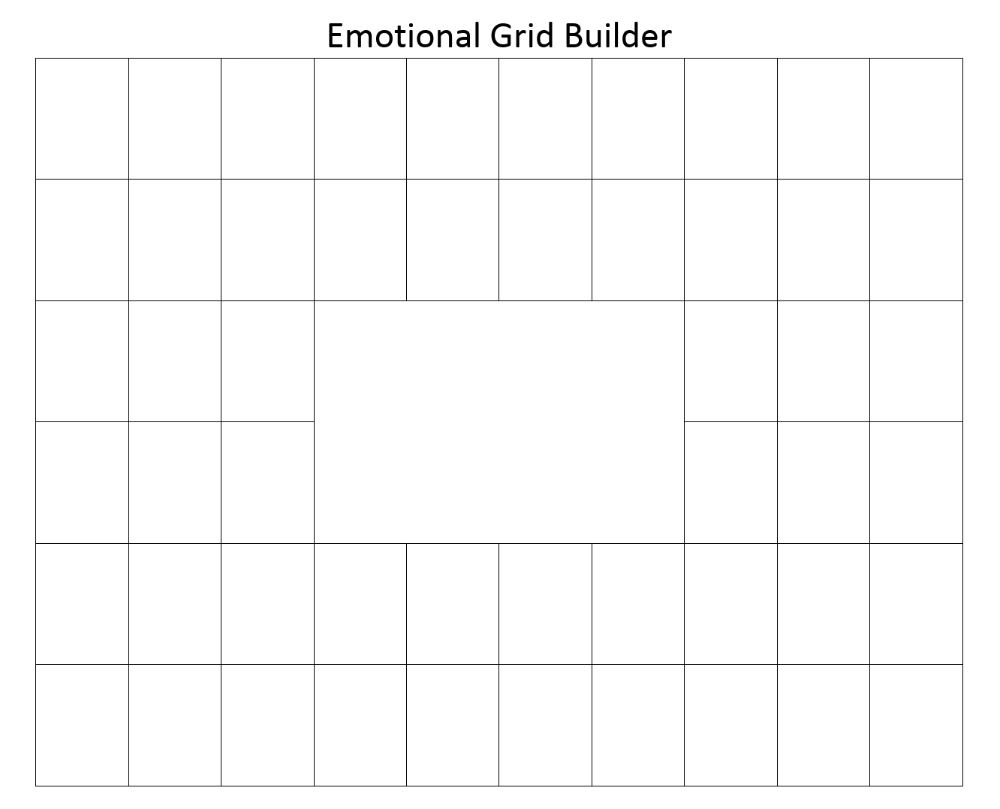
The Emotional Grid is the blueprint. It’s the shape of what you want, drawn in feeling instead of detail. You sketch the outline. The Universe colors it in.
You need the map before the blueprint is worth much. Lay a grid from despair and you get a grid made of despair, which is nobody’s idea of a good afternoon. So the order matters:
- Find yourself on the Scale. Pick one subject, money or work or a relationship, and name the feeling honestly. There’s no wrong answer here. It’s a location, not a grade.
- Climb a little at a time. Don’t try to leap from powerlessness to joy. Anger to frustration is a real move. Frustration to boredom is a real move. Keep going until you land somewhere steady, like hopefulness or belief.
- Then lay the grid. Once you’re in a decent-feeling place, put your desire in the middle and surround it with general good feelings.
- Let the specifics arrive. That part isn’t your job, and honestly, that’s the relief in it.
Staying General Is the Whole Trick
This is the part that took me longest.
You’re not ordering from a menu. Not the salary, not the job title, not the start date, not the person’s name. Get specific too early and your mind will start listing reasons it can’t happen. Mine is very good at this. It has a whole slideshow.
Stay general and there’s nothing to argue with.
So instead of “I need this offer by Friday,” you’re reaching for “I love the feeling of being valued.” Instead of the exact apartment, “I love the feeling of having somewhere that’s mine.”
A rule of thumb that has saved me a lot of spiraling: if getting specific feels good, get specific. If getting specific makes you anxious, go back to general.
Some feelings to build with:
Fun. Ease. Flowing. Smooth. Energizing. Exciting. Comfortable. Calm. Confident. Expansive.
The list can go on and on. If you want more of them, the word list from the ABC Game works beautifully here. I put that list together years ago, and half of it belongs on a grid.
Think of It Like a Coloring Book
Laying the grid is drawing the outline. You sketch the shape in black and white by holding a good-feeling thought. The Universe brings the color.
Insist on one exact shade, though, and you’ve handed the picture back with most of the crayons taken out. Hold the outline steady. Let the colors surprise you.
The 17 and 68 Seconds
This is the part people quote most, and it comes straight from the source:
Within 17 seconds of focusing on something, a matching vibration becomes activated. And now, as that focus becomes stronger and the vibration becomes clearer, the Law of Attraction will bring to you more thoughts that match. At this point, the vibration will not have much attraction power, but if you maintain your focus longer, the power of the vibration will become further-reaching. And if you manage to stay purely focused upon any thought for as little as 68 seconds, the vibration is powerful enough that its manifestation begins.
From Ask and It Is Given
So: 17 seconds gets the grid moving. 68 seconds and it’s well on its way.
Seventeen seconds sounds like nothing until you try to hold one clean thought for seventeen seconds. Then it sounds like a lot. Be gentle with yourself about that.
And you don’t have to fill in every square. I’m saying that again because it’s the part everyone skips. Put the desire in the middle, add the good feelings you already have about it, and leave the rest blank. The empty squares get filled in for you.
A Simple Grid Process for Beginners
Five or ten minutes. Longer if it feels good. This isn’t another thing to perform perfectly.
1. Pick one broad intention
Choose a feeling that would make your day softer. Keep it general enough that it doesn’t set something off.
Calm before a hard conversation. Confidence before applying for jobs. Connection, if things have been lonely lately.
One feeling is plenty. “More money, love, purpose, a new kitchen, and a personality that answers texts promptly” isn’t a grid. That’s a wish list with a deadline.
2. Let your mind find easy proof
Look for ordinary evidence that the feeling already exists somewhere, in small ways.
If your intention is support, maybe it’s the friend who checks in. Food in the fridge. A warm blanket. A doctor you could call if you needed to.
If your intention is freedom, maybe it’s an unscheduled hour this weekend. The fact that you can say no to one thing. A different route home.
None of it has to be impressive. Your mind accepts small true things far more easily than large shiny ones.
3. Stay with the feeling
Let the easy thoughts gather. You don’t have to visualize a whole movie.
Some people like imagining themselves already living with more ease. Others would rather write a few lines, look out the window, or hold a warm cup of something. It all counts.
Your grid doesn’t have to be serious to work, either. “I would like a slightly less annoying afternoon” is honest enough to build on.
4. Notice when you start forcing it
This is where being kind to yourself actually matters, and I know that sounds soft.
You start with ease. Then your mind goes, yes, but what if nothing changes? You haven’t ruined anything. You noticed a thought. That’s the whole event.
Reach for something more neutral:
- “I’m allowed to take this slowly.”
- “I don’t know the whole story yet.”
- “I can focus on the next hour.”
- “It would be nice if this felt lighter.”
Then stop. You don’t need to win an argument with your own brain.
5. Take the next grounded action
The grid isn’t a substitute for doing things. It clears a little static so you can see which thing to do.
After a few minutes, ask: what’s one small thing that feels like a soft yes?
Send one application instead of rebuilding the whole resume. Open the bill instead of letting it haunt the counter. Eat lunch before answering the message that has your heart doing cartwheels.
Sometimes the next step is a nap. That counts. A tired nervous system is not a reliable project manager.
When It Feels Hard or Fake
Some days you’ll sit down to do this and feel absolutely nothing. Other days every pleasant thought will irritate you. Both are normal, and neither means you’re broken.
It usually means the thought is too far ahead of where you actually are, which is a Scale problem rather than a Grid problem. Go back to the map. Find the next rung instead of the top one.
Broader helps. “There are parts of my life I don’t hate.” “I can deal with one piece of this today.” Low bar on purpose.
And if you’re in a real stress spiral, skip the spiritual homework for a while. Drink water. Eat something. Go outside. Put your phone in another room. Let the day stop touching you for ten minutes.
Your body gets a vote.
If anxiety, grief, or low mood is sticking around, a mindset exercise isn’t enough support on its own. Talking to a qualified mental health professional is a strong and caring next step, not a failure of vibration.
Keep It Useful, Not Heavy
All of this turns unhelpful the moment it becomes blame. You didn’t cause every disappointment by having a worried thought. You’re not failing because you can’t feel good while something painful is happening.
Use the grid as a compass, not a crystal ball.
A compass doesn’t promise a smooth road. It points a direction. You can still hit traffic, still need a map, still need to call someone who knows more than you do.
Get the FREE Emotional Grid Printable PDF
If you’d rather have something in your hands than in your head, I made one.
Put your desire in the middle. Add the feelings you already have about it. Leave the rest for the fairies of the universe to fill in.
Frequently Asked Questions
What is the difference between the Emotional Grid and the Emotional Guidance Scale?
The Scale is a diagnostic. It is a list of 22 emotions that tells you where you currently are on a subject. The Grid is a creative tool. You use it once you have climbed the Scale to a decent-feeling place, to lay the emotional shape of what you want. The Scale shows you where you are standing. The Grid is what you build from there.
What is the Abraham Hicks Emotional Grid?
It is a way of setting a general emotional tone around something you want, rather than specifying the details. You choose broad good feelings, hold them long enough to build momentum, and let the specifics fill themselves in.
How long should I spend on a grid?
Five to ten minutes is plenty. Seventeen seconds of genuine focus starts it moving and 68 seconds builds real momentum, so a few minutes of easy attention does more than an hour of effort.
What if I feel worse when I try to think positively?
Your resistance is high and the thought is too far from where you are. Go more general, reach for a neutral bridge thought, or stop and rest. Forcing it makes it worse.
Do I have to fill in the whole grid?
No. That is the point of it. You seed the grid with the feelings you can genuinely reach, and the rest gets filled in for you.
✨✨ Interested in learning more about the teachings of Abraham? Hop on over to the Abraham Hicks website. ✨✨

About Vickie Barnes
Twenty years in, by way of Wayne Dyer, Abraham Hicks, and EFT trained on Gary Craig's original methods.
I write from inside a family where several people I love are managing hard things, so I'm not going to hand you "raise your vibration" as a solution. It does work. Just slower and plainer than the books promise.